
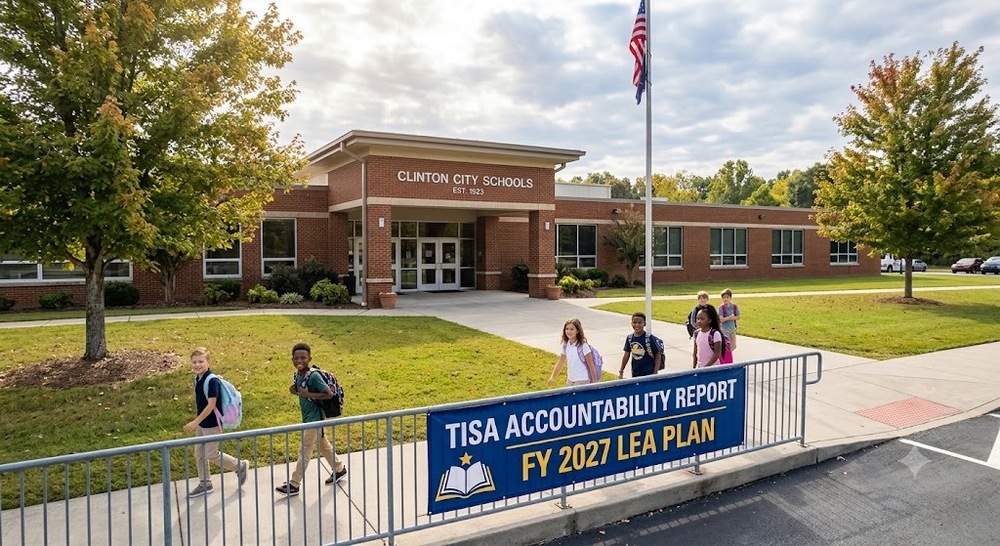
CLINTON, TN — Clinton City Schools (CCS) has released its latest Tennessee Investment in Student Achievement (TISA) Accountability Report, highlighting significant strides in foundational reading, key investments in instructional resources, and strategic plans to address recent challenges in upper-grade literacy and math performance.
Strong Gains in Early Literacy and 3rd Grade Reading
The TISA report details encouraging growth in early childhood reading initiatives. In 3rd Grade English Language Arts (ELA), students surpassed target expectations, reaching a 53.5% proficiency rate on the TCAP—exceeding the district's annual goal of 49.6% and building upon the 43.8% proficiency rate recorded in the 2023–2024 school year.
The district credited targeted TISA investments for these gains, including the expansion of the Level Up Learning program and the Really Great Reading intervention. Using AIMSweb data to guide Response to Instruction and Intervention (RTI), 3rd-grade Tier 1 instruction grew from 71% to 87% of students, while Tier 3 intervention needs dropped from 12% to 6%.
Additionally, students in kindergarten through 2nd grade demonstrated strong growth, with 80% achieving proficiency on iReady assessments. Across the district, 44% of students met their iReady stretch growth targets in ELA, signaling accelerated progress in closing achievement gaps.
Addressing Challenges and District Priorities
While early literacy metrics showed positive momentum, the report outlined areas where performance dipped, particularly across grades 3–6 in both ELA and math:
Grades 3–6 ELA: Proficiency measured at 52.6% on the TCAP, down slightly from 56.9% the prior year, though remaining well above the 41.1% baseline established in 2021.
Grades 3–6 Math: Math proficiency reached 49.5%, experiencing an 8% decline from the previous year's peak of 57.9%, though continuing a positive long-term trajectory from 45% in 2021.
District officials pointed to severe staffing disruptions as a primary factor impacting overall achievement during the school year. CCS experienced 13 maternity leaves—representing approximately 9% of total district staff, including half of the 3rd-grade teaching team out for an entire semester. The challenge of securing high-quality interim teachers highlighted the essential role certified, experienced educators play in student achievement.
Strategic Action Plan for 2026–2027
To build on successes and reverse recent dips, Clinton City Schools has outlined several core strategies for the upcoming school year:
Math Fluency: Implementing a dedicated 15-minute daily math fluency intervention block within Tier 1 instruction to complement high-quality instructional materials.
Expanded Tutoring: Expanding All Corp tutoring across grades K–5 to address specific learning gaps in reading and math.
Teacher Development & Leadership: Continuing partnerships with the National Institute for Excellence in Teaching (NIET) to strengthen Professional Learning Communities (PLCs), elevate instructional rigor, and support school principals as instructional leaders.
Technology Access: Maintaining 1:1 iPad and Chromebook access to ensure all students reach targeted personalized instruction hours on learning platforms.
Public Input Requested
Clinton City Schools invites parents, community members, and stakeholders to review the accountability report and share their feedback.
Comments and input can be sent to Kelly Johnson, Director of Schools, at johnsonk@clintonschools.org by Friday, September 11.